Why Does AI Recommend Your Competitors Instead of Your Brand? GEO Insights from BubbleShare at CMS
Why does AI recommend competitors instead of your brand? Explore insights from BubbleShare's analysis of 490K AI responses and 2.23M cited URLs, and learn what they reveal about brand visibility in AI search.
10 min read
by Sooah Lee
When AI introduces your brand to potential customers, what information does it rely on? And if your brand is mentioned more frequently than competitors, does that mean it also stands out on the factors customers care about most?
On October 26, BubbleShare CEO Sooah Lee presented findings from an AI search data analysis and discussed how brands can approach GEO in a session titled “Why Does AI Recommend Competitors Instead of Us?” at CMS.
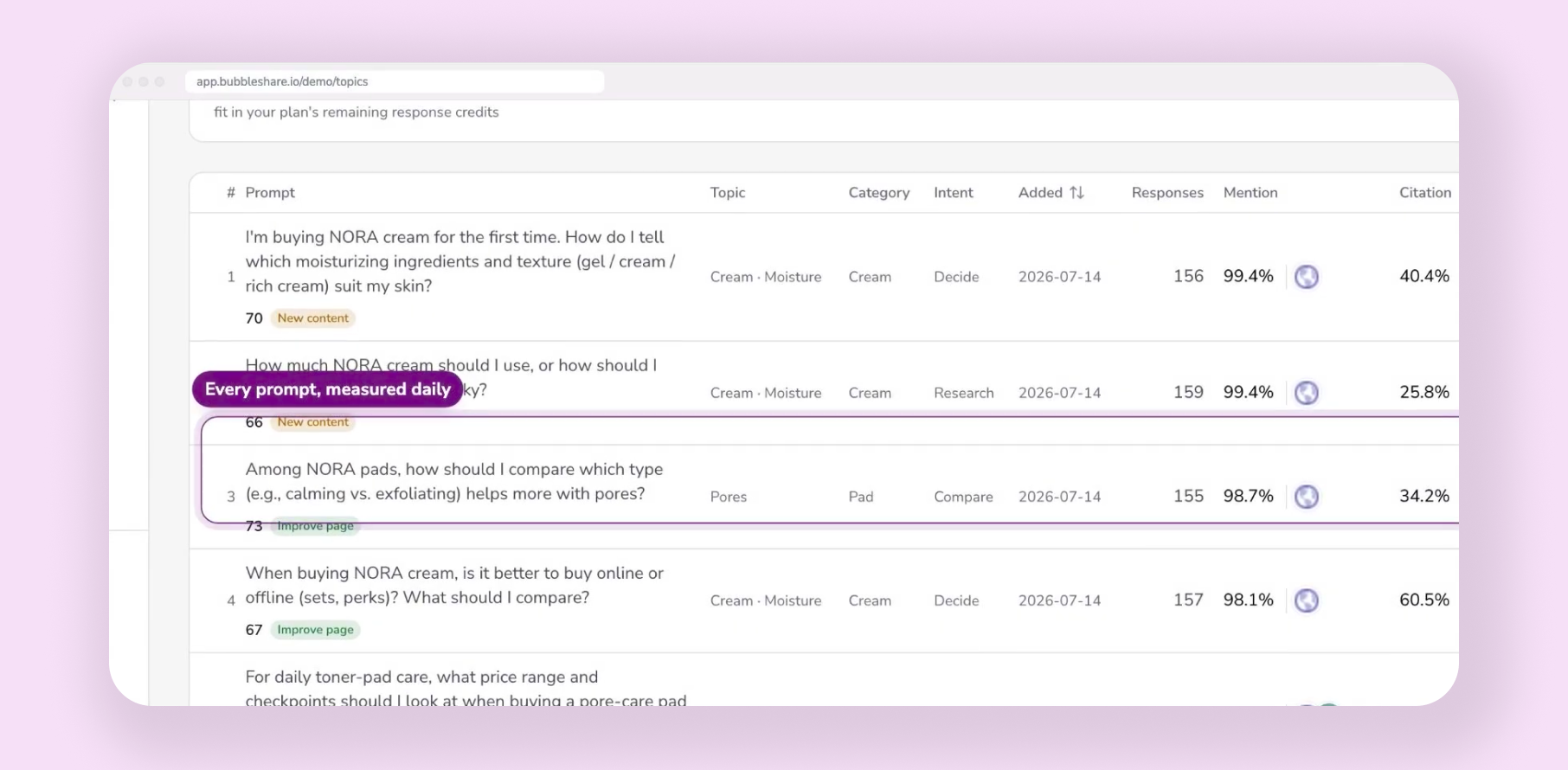
For the session, BubbleShare analyzed approximately 2.23 million cited URLs and 490,000 AI-generated responses collected through VIVI, its AI visibility platform. The analysis examined which sources different AI engines rely on across industries and how opportunities for brand visibility vary depending on the intent behind customer questions.
In this article, we explore what these findings mean for identifying content gaps, addressing customer questions, and understanding how AI describes your brand compared with competitors.
1. What Sources Does AI Rely on When Describing Brands?
To plan content for AI search, brands first need to understand which sources AI uses to answer customer questions. Over a 92-day period from July 16 to October 15, BubbleShare collected responses and cited URLs from seven AI engines across 2,465 questions. When the cited URLs were classified by source type, distinct patterns emerged across engines.
AI Engine
Key Finding from Citation Analysis
ChatGPT
Corporate-owned websites accounted for 62.1% of citations
Gemini
Corporate-owned websites accounted for 57.7% of citations
Naver AI Briefing
Naver Blog accounted for 42.2% of citations
Google AI Overviews
Video content accounted for 18.8% of citations
Corporate-owned websites represented a substantial share of citations in ChatGPT and Gemini. Naver Blog was a major source for Naver AI Briefing, while Google AI Overviews cited a higher proportion of video content than the other engines analyzed.
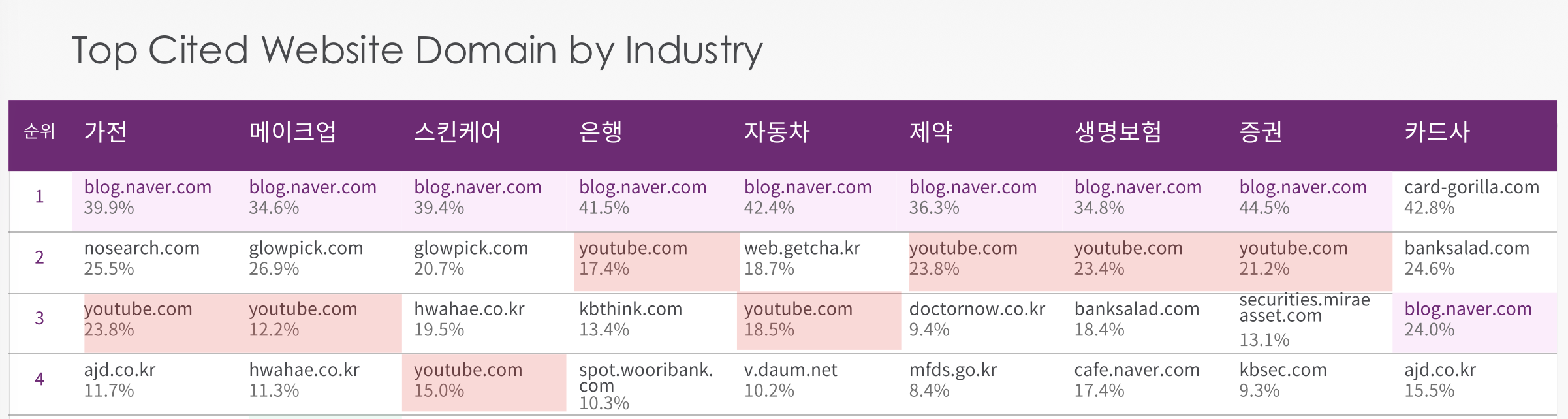
Looking at the most frequently cited domains across industries, Naver Blog and YouTube also stood out. Naver Blog was the most-cited domain in eight of the nine industries analyzed, while YouTube ranked among the top three in seven industries.
These findings suggest that blogs and videos play an important role in the sources AI uses across industries such as consumer electronics, beauty, and financial cards. Brands therefore need to look beyond their own websites and examine how external content is cited by AI, as well as how their brands are described within that content.
A practical starting point is to review external sources that AI actually cites and identify the criteria those sources use to compare and recommend products. Information emphasized on your website may be missing from external content, or competitors' strengths may be supported by more specific evidence.
2. Build Content Around Customer Intent and Industry Context
Brand Visibility Opportunities Vary by Customer Intent and Context
Before making a purchase, customers describe their situations, define their requirements, and compare available options. Our analysis found that the likelihood of a brand appearing in an AI-generated response varied depending on the intent behind the user's question.
Query Intent
Percentage of Responses Mentioning a Brand
Understanding the situation or identifying criteria
50.2%
Exploring concepts
29.7%
Comparing alternatives
61.4%
Final checks before purchase or sign-up
43.9%
Using VIVI, BubbleShare's AI visibility platform, we compared brand mention rates across approximately 260,000 AI responses that could be classified by query intent. One notable finding was that comparison queries had a 17.5 percentage-point higher brand mention rate than questions asked immediately before a purchase or sign-up. Brands also appeared in approximately half of the responses to questions about situations or selection criteria. This suggests that brands focusing their content exclusively on purchase-stage questions may miss opportunities to appear while customers are defining their requirements and comparing potential options.
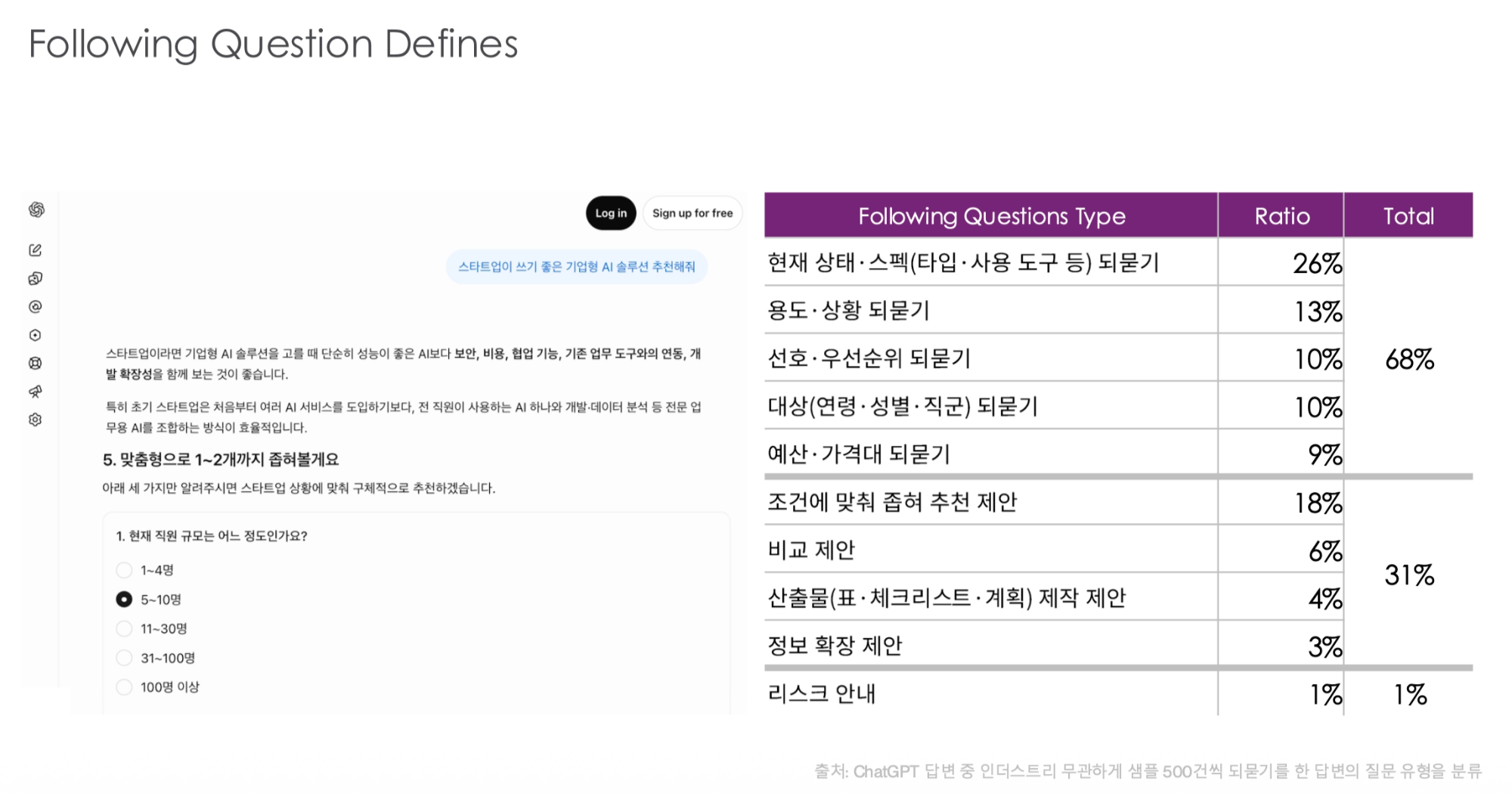
A separate analysis of AI follow-up questions further highlighted the importance of user context. BubbleShare sampled and categorized ChatGPT responses containing follow-up questions and found that 68% focused on understanding the user's current situation and requirements.
Current situation and tools (26%): What environment is the user working in, and what tools are they currently using?
Use case (13%): What task or purpose will the product serve?
Preferences and priorities (10%): Which factors matter most when making a decision?
Intended user (10%): Who will use the product or service?
Budget (9%): What price range is the user considering?
When a brand's website and other content clearly address these selection criteria and usage requirements, its products may be better positioned to appear in AI recommendations that match customer intent.
The Types of Content AI Cites Also Vary by Industry
Another consideration is how brands present the information customers need. Our industry-level analysis revealed differences in the types of content most frequently cited by AI.
Industry
Most-Cited Content Type
Other Frequently Cited Types
Software
Analysis and insights 18.3%
Listicles 16.6%, tutorials 13.5%
Healthcare
Factual information 16.9%
News 10.7%, product detail pages 8.6%
Beauty
Listicles 18.0%
Product detail pages 14.5%, reviews 11.2%
In software, AI frequently cited content providing analysis and practical guidance. In beauty, product lists, detailed product information, and user experiences were prominent citation sources. Understanding which content types AI relies on in your industry can help determine which formats to prioritize when creating content that answers customer questions.
3. Look Beyond How Often AI Mentions Your Brand to Understand Which Strengths It Associates with You
Appearing frequently in AI-generated responses is not the same as being recognized for the product strengths customers care about.
Consider enterprise AI adoption. Businesses evaluating AI tools compare a range of factors, including cost, security, development support, integration with existing systems, and local support. To examine this decision-making context, BubbleShare developed 100 questions and collected 8,000 responses across four AI engines.
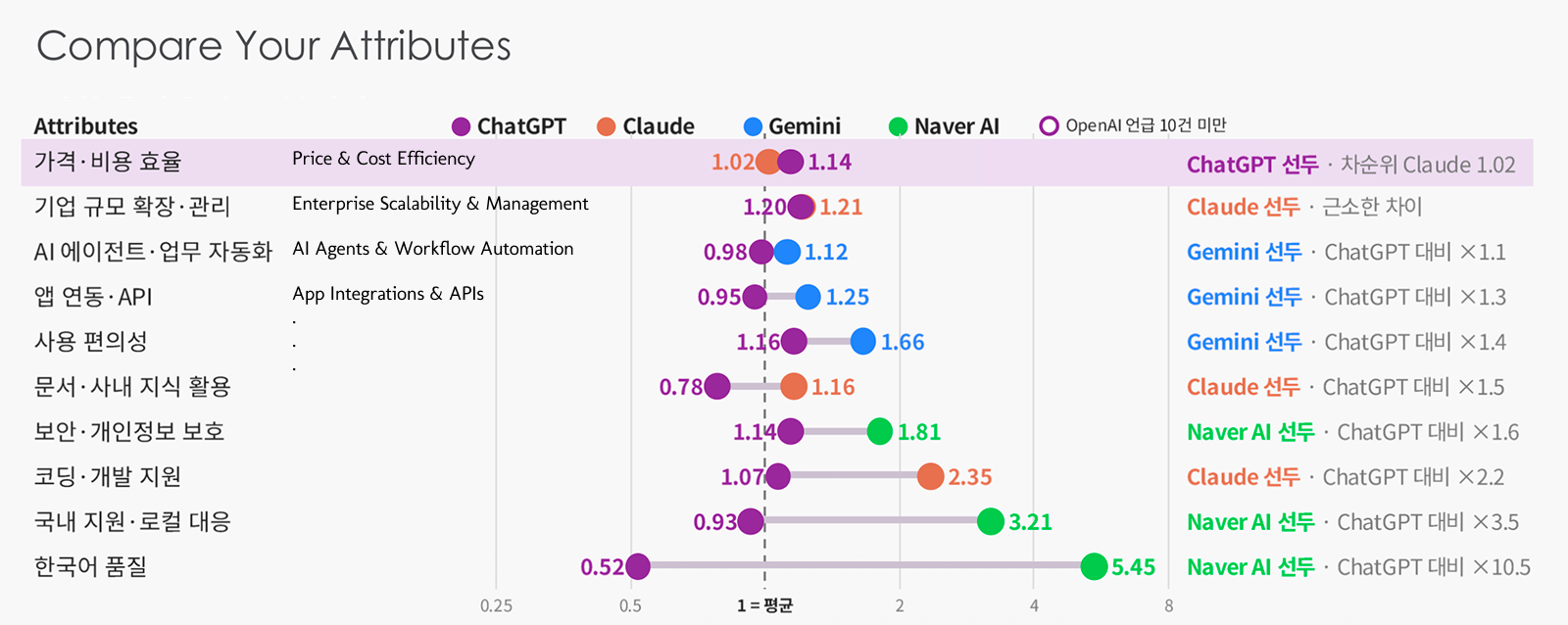
In the overall analysis of brand and product mentions, OpenAI and ChatGPT showed strong visibility. However, when we compared how frequently specific attributes appeared alongside each brand, clear differences emerged in the strengths associated with each brand.
Customer Selection Criteria
Relative Attribute Index by Brand
Price and cost efficiency
ChatGPT 1.14, Claude 1.02
Coding and development support
Claude 2.35, ChatGPT 1.07
Ease of use
Gemini 1.66, ChatGPT 1.16
Local support and localization
Naver AI 3.21, ChatGPT 0.93
The attribute index measures how frequently a given attribute appears in paragraphs describing each brand. An index of 1.0 represents the overall attribute inclusion rate across the four brands. Higher values indicate that a brand is associated with a particular attribute more frequently relative to that baseline.
Although ChatGPT had high overall visibility, it also ranked highest for price and cost efficiency. Meanwhile, Claude was more strongly associated with coding and development support, Gemini with ease of use, and Naver AI with local support and localization. This highlights why brands should examine not only their overall mention rates but also how AI describes them in relation to the criteria customers use to make decisions. It is equally important to identify whether competitors are more strongly associated with the specific strengths your brand wants to communicate.
For example, if a service positions security as its key differentiator but AI primarily describes it in terms of pricing and ease of use, the brand may need to examine whether sufficient evidence is available for AI to recommend it in response to security-related questions.
By analyzing these attribute-level differences, brands can identify gaps between the strengths they want to emphasize and the descriptions that actually appear in AI responses. These insights can then guide which messages and supporting evidence need to be improved.
So, how does AI currently describe your brand? With VIVI, you can examine the differentiating attributes associated with your brand and competitors in AI-generated recommendations.
4. Analyze Brand Mentions and Citations Separately to Identify What to Improve Next
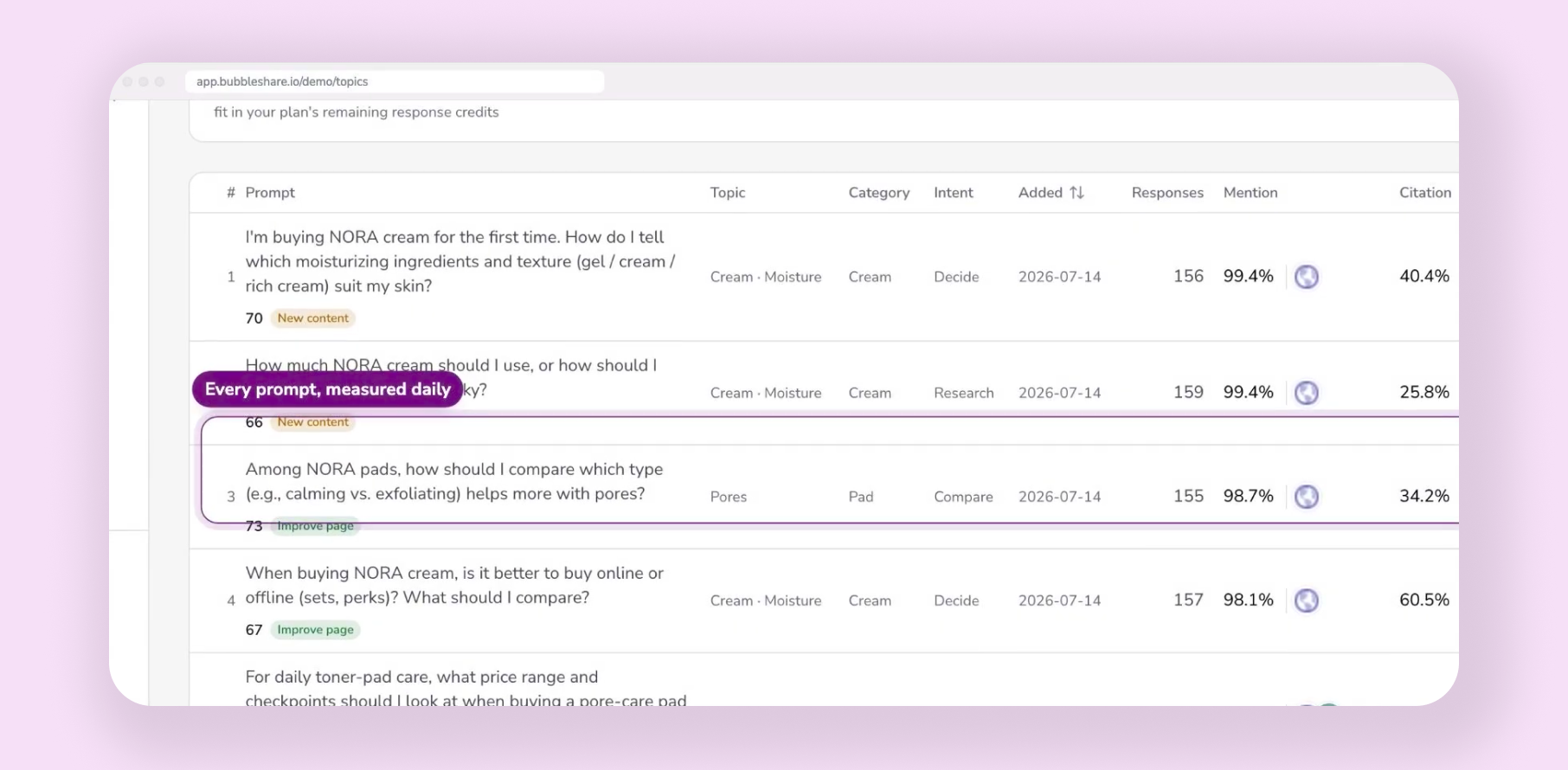
When evaluating a brand's AI visibility, it is important to examine both mentions and citations. A brand mention occurs when the brand's name appears in an AI-generated response. A citation occurs when an AI response includes a source link. By examining these signals separately, brands can identify more specific areas for further investigation.
Observed Situation
What to Examine Next
Your brand is mentioned, and your website URL is cited
Which attributes does AI associate with your brand compared with competitors?
Your brand is mentioned, but your website URL is not cited
Are there issues with your website's accessibility or information structure that need attention?
Your website URL is cited, but your brand is not mentioned
How do external sources describe your brand and its strengths?
Neither your brand nor your website URL appears
Does your brand provide enough content to answer the questions your target customers are asking?
In particular, if neither your brand nor your website appears in responses to questions customers frequently ask, start by checking whether your brand provides specific product information that answers those questions. For example, if the availability of local customer support is an important selection criterion, examine whether your website clearly explains the scope of support and the available contact channels. Depending on the observed results, brands can determine whether to review their website's information structure, investigate how they are described externally, or create new content.
Let AI Responses Guide Your Next Content Priorities
How AI describes your brand in search results is closely connected to how well you provide and maintain information that answers customer questions. A central takeaway from BubbleShare's CMS session was the importance of continuously reviewing and improving that information.
To put this into practice, brands can follow a four-step process:
Select relevant questions: Identify the customer questions that matter most to your business.
Review responses and sources: Check whether your brand appears, which sources AI cites, and how your brand is described compared with competitors.
Improve your content: Address information gaps and strengthen content that does not adequately answer customer questions or communicate your brand's strengths.
Measure again: Monitor responses and cited sources for the same questions to identify changes over time.
Maintaining this process consistently requires reducing the manual effort involved in collecting and reviewing AI responses. Marketing teams should be able to focus on deciding which content to improve first and what supporting evidence to strengthen, rather than spending their time repeatedly gathering the same data.
Where should your brand focus its next improvements? Use VIVI to review brand mentions and citations across customer questions and prioritize your next content optimization efforts.